YC's 'Cursor for PMs': Building AI-Native Product Synthesis
Automate the initial draft of a Product Requirements Document (PRD) or quickly synthesize a week's worth of customer feedback into actionable insights, saving Product Managers hours of manual work instantly.
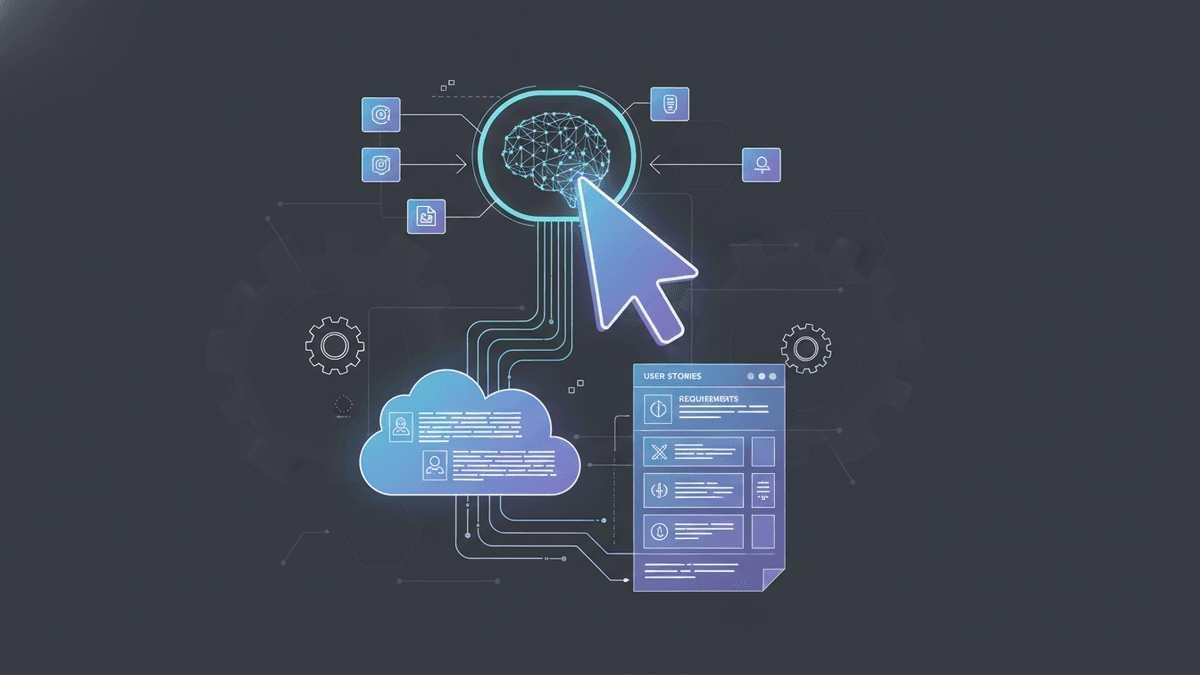
Product Managers are struggling: up to 40% of their time is consumed by manual feedback synthesis and documentation. This isn't just an inefficiency; it’s a critical bottleneck. As AI coding agents rapidly accelerate development, the PM's "discovery and synthesis" phase lags significantly, widening the gap in the product development pipeline.
Y Combinator's Spring 2026 Request for Startups (RFS) explicitly validated this problem, calling for a "Cursor for Product Managers." This signals a massive opportunity for founders to build truly AI-native solutions. The focus is a paradigm shift: an AI system that actively unifies product data, proposes features, and automates specifications, fundamentally transforming product development beyond human-augmented tools.
The PM Bottleneck: A Strategic Drag
Traditional product management demands sifting through vast, fragmented data—customer interviews, support tickets, analytics, and stakeholder requests. Synthesizing this into actionable Product Requirements Documents (PRDs) consumes significant cognitive load. With AI accelerating code generation, the 'what to build' problem becomes the slowest, most manual part, limiting PM strategic capacity.
Architecting the AI-Native Synthesis Layer
The vision is an AI-native platform actively unifying data from disparate sources: Jira, Figma, Slack, CRM, and analytics. This platform moves beyond summarization, analyzing inputs to propose concrete features, user stories, and actionable requirements. Key functions include automating feedback synthesis—classifying, tagging, and prioritizing customer comments—and generating initial PRD drafts, potentially reducing creation time from eight hours to 45 minutes for significant operational leverage.
Leveraging Large Language Models (LLMs) and sophisticated algorithms, the goal is active orchestration. The AI should recommend and justify solutions with data-backed insights, structuring them for immediate engineering consumption. The core value is proposal, driving proactive product development.
Founder's Blueprint: Integrations & Data Moats
Founders must prioritize deep, bi-directional integrations from day one. Seamless connections to existing PM ecosystems (Jira, Figma, Slack, Salesforce, Mixpanel) via robust APIs and webhooks are non-negotiable. Data fluidity is paramount.
Consider niching down. Focus on a specific vertical or PM persona for deeper problem understanding, targeted data ingestion, and faster iteration, building a stronger product and proprietary data moat. Architect your system for active synthesis and proposal, prototyping with cutting-edge LLMs for genuine AI 'judgment'. Frame your narrative with YC’s thesis: build AI-native companies that eliminate coordination and reshape entire systems.
Strategic ROI: Empowering & Transforming
The commercial upside of an AI-native product synthesis layer is substantial. Automating synthesis and documentation reclaims 10-15 hours per week for PMs. This liberates them for high-value strategic thinking, deep user research, and complex problem-solving, elevating their role from administrative coordinator to true strategist. For organizations, this translates to accelerated product development, better-defined features, and reduced coordination costs. The ultimate outcome is system-level transformation in product management, where decisions are informed by a continuously learning AI, leading to more impactful and successful products—the operational leverage forward-thinking companies will demand.
Ready to build the future of Product Management? Leverage YC's market signal and start architecting your AI-native product synthesis platform today. What's your first step?