Autonomous AI Agents: Reshaping Engineering and Product Roadmaps
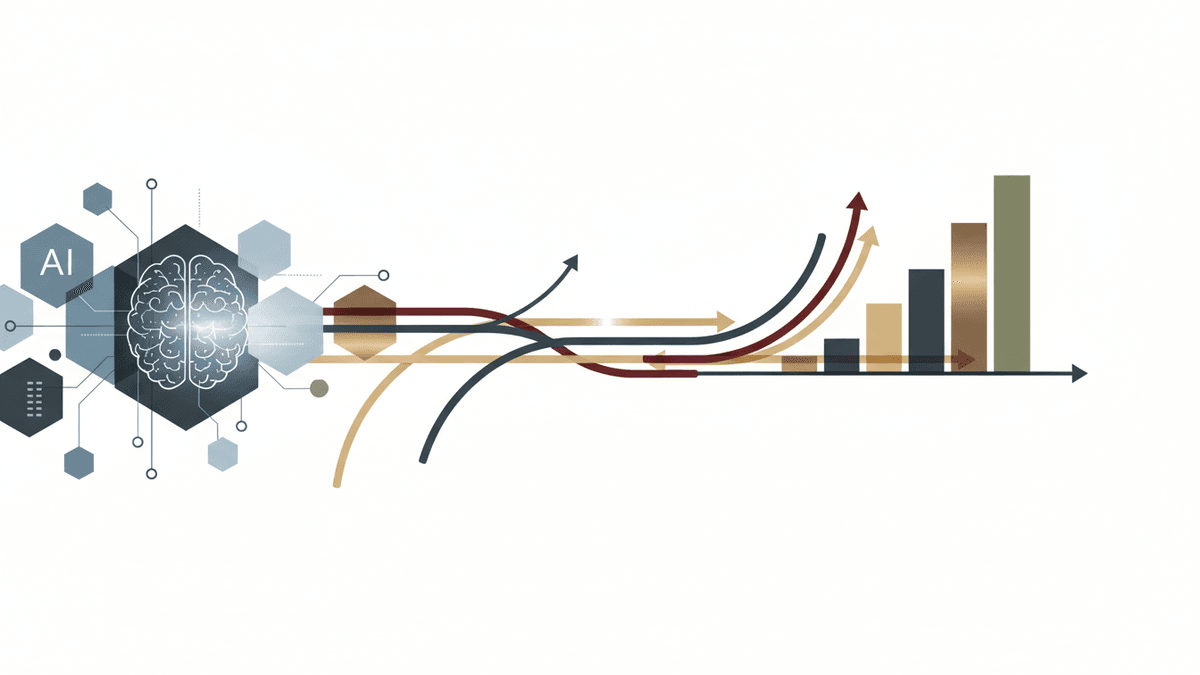
The developer experience is undergoing a fundamental shift, moving beyond incremental tooling improvements to a new paradigm of autonomous agents. This isn't about faster autocomplete or smarter code suggestions; it's about systems capable of end-to-end problem-solving, independently navigating complex engineering tasks.
Consider Cognition Labs' Devin, which has demonstrated the ability to take a natural language prompt and autonomously build a complex web application, fix bugs within unfamiliar codebases, and even learn to use new technologies. This agent operates within its own sandboxed environment, equipped with a shell, code editor, and browser—the same tools a human engineer uses—to plan, execute, test, and debug code, ultimately submitting a pull request for human review. Such capabilities redefine what it means to be an "engineer" in a product team.
Why Autonomous Agents Reshape Your Roadmap
For smart operators, founders, and product leaders, this shift isn't a distant future concern; it's a strategic imperative. AI agents aren't merely advanced copilots; they are autonomous engineers. Ignoring this distinction means potentially falling behind competitors who are leveraging these tools to accelerate product development cycles, overcome engineering bottlenecks, and achieve faster iteration velocity.
The commercial implication is direct. Teams that effectively integrate AI agents can significantly accelerate their development cycles, potentially operating with smaller, more efficient engineering units. This translates to quicker time-to-market and reduced burdens on senior engineers, freeing them for higher-level architectural decisions and creative problem-solving.
Integrating Agents: Practical Steps for Product Leaders
Successfully integrating AI agents means more than just adopting a new tool; it requires a workflow transformation. The focus for human developers shifts from direct coding to defining problems, monitoring agent progress, and critically reviewing their outputs.
Begin by piloting AI agents on isolated, well-defined tasks. Think routine bug fixes, small feature additions, or refactoring efforts where the scope is clear and the risk is contained. Document the steps a human engineer currently takes for such tasks; this provides a crucial baseline for evaluating agent performance and understanding potential gains.
Your existing engineering talent will transition to higher-level responsibilities. This involves architects focusing on system design and overall strategy, while front-line developers become supervisors and orchestrators of AI agents. Crucially, invest in 'prompt engineering'—crafting precise instructions for agents—and 'review engineering'—developing robust processes for validating their generated code.
The Evolving Engineering Team: Skills and Strategy
This evolving landscape necessitates a strategic look at team composition and skill development. Rather than fearing job displacement, smart organizations will plan for re-skilling existing teams. The emphasis will move towards abstract problem-solving, system-level thinking, and effective human-AI interaction.
Understand the tradeoffs. While agents promise significant productivity gains, considerations around debugging complex, agent-generated code, the security implications of autonomous access to development environments, and potential over-reliance leading to skill degradation remain valid. A thoughtful approach prioritizes human oversight and strategic application.
This isn't about replacing all developers, but rather augmenting human capability, allowing teams to do more with less routine work. The competitive edge will go to those who learn to orchestrate these powerful new partners effectively.
Start experimenting with AI agent concepts on low-risk tasks today to understand their capabilities firsthand and prepare your organization for this profound shift in how software is built.